Are Home Prices Dropping in Minneapolis? Here's What the Data Says

Miguel Lopez
March 2, 2026
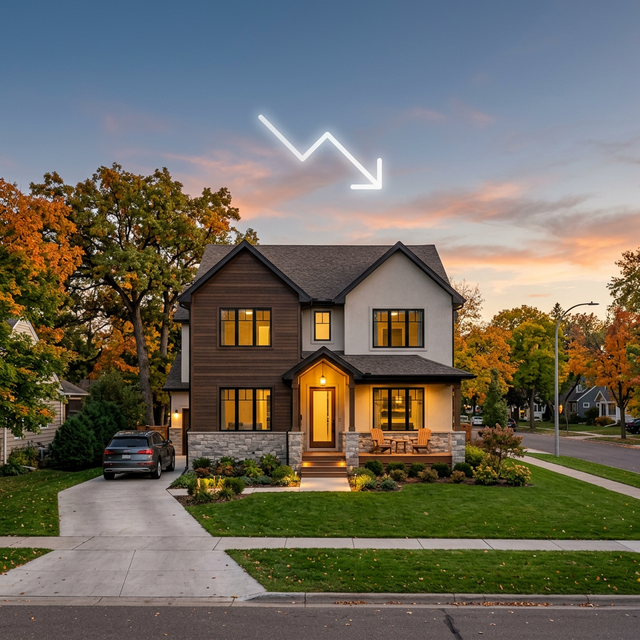
Are Home Prices Dropping in Minneapolis?
No — Minneapolis home prices are not dropping in any meaningful way. The average home value sits at approximately $316,000, up about 1.2% year-over-year. While median listing prices dipped roughly 7.5% (to around $293,700), that reflects sellers pricing more realistically — not a decline in actual home values. Sale prices remain stable across most of the metro.
Here's the full picture, neighborhood by neighborhood.
What the Numbers Actually Show
Let's break this down by what's happening at the metro level and then neighborhood by neighborhood.
Metro-Wide Trends
- Median sale price: Holding steady with modest 1-3% annual appreciation across most of the metro
- Median listing price: Down in Minneapolis proper, reflecting sellers pricing more realistically
- Inventory: Up roughly 12% compared to early 2025 — more choices for buyers, less urgency
- Days on market: Averaging around 35 days for well-priced homes, up from the 7-14 day frenzy of 2021-2022
- Pending sales: Down 12.9% in the metro — fewer transactions, not necessarily lower prices
The market isn't crashing. It's normalizing. After years of historically low inventory and bidding wars, we're moving toward a healthier balance between buyers and sellers.
Where Prices Are Strongest
Some areas of the Twin Cities continue to see steady or rising prices:
- Southwest Minneapolis (Linden Hills, Lynnhurst, Kenny) — premium neighborhoods with limited inventory continue to hold value. Demand consistently outpaces supply
- Edina and Eden Prairie — suburban demand from families and move-up buyers keeps these markets competitive, with medians above $450,000
- Northeast Minneapolis — strong appreciation trajectory fueled by continued development, restaurant/arts scene, and proximity to downtown
Where Prices Have Softened
- North Minneapolis — some price softening, though values here were already lower. Investors are seeing buying opportunities
- Outer-ring suburbs — areas that saw the biggest pandemic-era price jumps (Lakeville, Blaine, Rogers) are experiencing the most correction as buyers reassess commute patterns
- Condo market — downtown Minneapolis condos have seen price pressure from rising HOA fees and increased inventory. This is actually a window of opportunity for buyers
St. Paul
St. Paul's median sits around $295,000 — slightly below Minneapolis. The east metro has been more stable overall, with less dramatic swings in either direction. Solid value for both buyers and investors.
Why the Headlines Are Misleading
Real estate headlines are designed to get clicks, not inform decisions. Here's what they usually get wrong:
"Prices Are Falling" vs. "Prices Are Adjusting"
A 7.5% decline in listing prices doesn't mean your home lost 7.5% of its value. It means sellers are listing closer to what the market will actually bear, instead of testing the waters with aspirational prices. This is healthy.
National Trends Don't Apply Locally
Minneapolis is not Phoenix, Austin, or Miami. Those markets saw 30-50% price spikes during the pandemic and are now correcting hard. Minneapolis saw steady 5-10% annual appreciation — less dramatic going up, less dramatic coming down.
Interest Rates Changed the Math, Not the Market
When rates jumped from 3% to 7%, the monthly payment on a $350,000 home increased by about $800/month. That reduced buying power, which naturally put downward pressure on what buyers could offer. But the fundamental demand for housing in Minneapolis hasn't changed — people still need homes in a metro with a strong economy and growing population.
What This Means for Buyers
If you're a buyer in 2026, this market works in your favor in several ways:
- More negotiating power — sellers are more willing to negotiate on price, repairs, and closing costs than they were two years ago
- More inventory — you're not competing against 15 other offers on every home
- Time to think — homes are sitting for weeks, not hours. You can do due diligence without panic
- Realistic pricing — listing prices now more closely reflect what homes will actually sell for
The flip side: interest rates are still elevated compared to the pandemic era. But if rates drop even modestly later this year — which many economists expect — you could refinance into a lower rate on a home you bought at today's prices. Buy the house now, refinance the rate later.
Check out my first-time buyer guide for a step-by-step walkthrough of the buying process.
What This Means for Sellers
If you're selling, the market isn't working against you — but it does demand a smarter approach:
- Price it right from day one — overpricing is the single biggest mistake in this market. Homes priced at or slightly below market value still generate strong interest and multiple offers
- Invest in presentation — staged, professionally photographed homes outperform the competition by a wide margin
- Be patient but strategic — expect 3-5 weeks on market instead of 3-5 days. That's normal — not a sign of trouble
- Leverage Compass tools — the Coming Soon program lets us test market interest before going live on the MLS
For a deeper dive on selling strategy, read my guide to selling your home fast.
Want to know exactly where your home stands? Start with a free home valuation.
The Bigger Picture
Minneapolis is not in a housing crisis. It's in a recalibration. The pandemic distorted prices, compressed timelines, and created unrealistic expectations for both buyers and sellers. What we're seeing in 2026 is the market finding its footing — and that's a good thing for everyone.
Home values are supported by strong fundamentals: job growth, population stability, limited new construction relative to demand, and a quality of life that continues to attract families and professionals to the metro.
My advice? Make decisions based on your personal situation — your timeline, your budget, your life plans — not on headlines. The market will always have noise. The data tells the real story.
Want a data-driven perspective on your specific situation? Get in touch and let's look at the numbers together.
Ready to make a move?
Let's Talk Real Estate
Whether you're buying, selling, or investing — I'm here to help you navigate the Twin Cities market with confidence.
Related Articles