Best Neighborhoods in Minneapolis for Families in 2026

Miguel Lopez
March 1, 2026
Finding the Right Neighborhood for Your Family
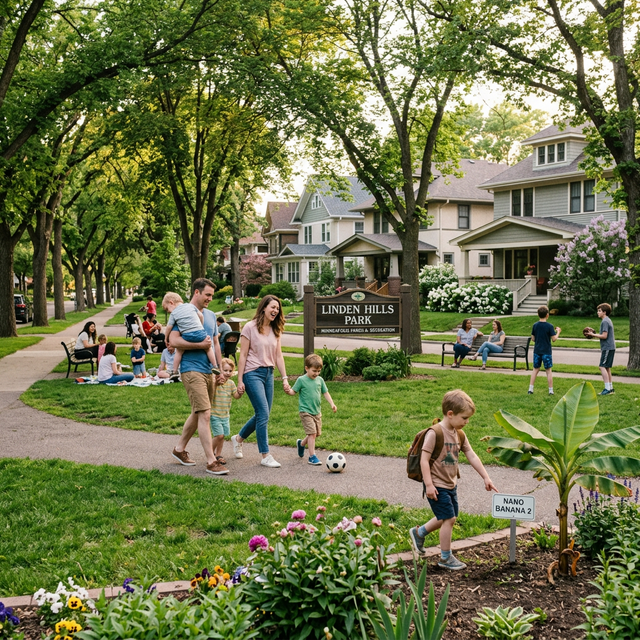
Choosing where to raise your family is about more than square footage and price per square foot. It's about the walk to school, the park down the block, the neighbors who wave from their front porches. Minneapolis has some truly exceptional neighborhoods for families — but they each offer something different.
I've helped families relocate to every corner of this city, and I've seen firsthand how the right neighborhood can transform daily life. Here's my honest breakdown of the best family-friendly areas in Minneapolis for 2026, including what the data says and what it feels like on the ground.
Linden Hills — Walkable Charm Meets Lake Life
Median home price: ~$550,000
Linden Hills is one of those neighborhoods that feels like a small town tucked inside a city. Centered around the intersection of 43rd and Upton, you'll find locally owned coffee shops, a beloved bookstore, bakeries, and restaurants — all within walking distance of Lake Harriet.
Why Families Love It
- Lake Harriet is the centerpiece — walking paths, the bandshell concert series in summer, sailing, and a beach that's perfect for kids
- Strong public schools — Lake Harriet Lower and Lake Harriet Upper are highly rated and have active parent communities
- Walkability — one of the most walkable neighborhoods in Minneapolis, which means kids can bike to the ice cream shop
- Community events — the Linden Hills Festival, farmer's market, and holiday events keep the neighborhood connected year-round
The Tradeoff
Linden Hills commands a premium. Homes here are predominantly single-family, many with character and updates, but inventory is tight and competition is consistent. If you're targeting this area, you need to be ready to move quickly.
Linden Hills is where families put down roots and stay for decades. That says a lot.
Southwest Minneapolis / Lynnhurst — Parks, Schools, and Community
Median home price: ~$450,000
Just east of Linden Hills, Lynnhurst offers much of the same family-friendly infrastructure at a slightly lower price point. This neighborhood has deep roots and a strong sense of identity.
Why Families Love It
- Minnehaha Creek corridor — green space and trails running through the neighborhood
- Lynnhurst Park — playground, ball fields, community recreation center, and a swimming pool in summer
- School options — Kenny Elementary and Burroughs Elementary are popular; families also access strong options through Minneapolis Public Schools' magnet and open enrollment programs
- Classic housing stock — well-maintained 1920s-1950s homes with larger lots compared to more urban neighborhoods
- Proximity to 50th & France — the Edina border means easy access to shopping and dining in this popular retail district
The Tradeoff
Some blocks are quieter and more car-dependent than neighborhoods closer to the lakes. But for families who want a bigger yard and a neighborhood feel without leaving the city, Lynnhurst is hard to beat.
Nokomis — Diverse, Affordable, and Full of Character
Median home price: ~$350,000
The Nokomis area — encompassing Nokomis, Nokomis East, Minnehaha, and Wenonah — is one of the best values in Minneapolis for families. Anchored by Lake Nokomis and Minnehaha Falls, this part of the city offers nature, diversity, and genuine community.
Why Families Love It
- Lake Nokomis — swimming beach, trails, kayaking, and a parkway loop that's perfect for family bike rides
- Minnehaha Falls — one of the city's most iconic natural landmarks, right in your backyard
- Diversity — Nokomis is one of the more racially and economically diverse parts of the city, which many families value
- Affordability — entry-level homes start in the mid-$200s; updated homes in the mid-$300s give you strong value
- Light rail access — the Blue Line runs along Hiawatha, making downtown commutes painless
The Tradeoff
School ratings are more mixed in this area — families should research individual schools and consider magnet options. Some pockets are still transitioning, so it pays to get neighborhood-specific data before making an offer.
For first-time buyers with families, Nokomis is one of the best entry points into Minneapolis homeownership. Read my first-time buyer guide for tips on getting started.
Northeast Minneapolis — Arts, Culture, and Growing Families
Median home price: ~$325,000
Northeast has transformed over the past decade from a quiet, working-class area into one of the most vibrant neighborhoods in the city. And while it's known for breweries and art studios, it's also increasingly attracting young families.
Why Families Love It
- Community identity — Northeast has a strong sense of place, with neighborhood pride running deep across its micro-communities (Nordeast, St. Anthony West, Windom Park, Holland)
- Arts and culture — Art-A-Whirl, local galleries, and live music give the area a creative energy that's hard to replicate
- Restaurants and local businesses — from Young Joni to Surdyk's, this is one of the best food neighborhoods in the metro
- Affordability with upside — homes are still accessible, and appreciation trends have been strong, making it a smart financial move
- Improving parks and infrastructure — investments in Boom Island, the riverfront trail system, and neighborhood parks continue
The Tradeoff
Some areas of Northeast are more nightlife-oriented, which may not suit every family. Traffic can be heavier near University Avenue and Central Avenue corridors. Do your homework on specific blocks — the feel can change significantly from one street to the next.
School Considerations
Northeast families often look at Pillsbury Elementary, Waite Park, and various charter and magnet options. The area also has strong preschool and childcare options, which matters for families with younger children.
Kenny / Armatage — Quiet, Steady, and Underrated
Median home price: ~$375,000
Tucked into the southwestern corner of Minneapolis, Kenny and Armatage are two of the most underrated family neighborhoods in the city. They don't generate the buzz of Linden Hills or Northeast, but that's part of the appeal.
Why Families Love It
- Quiet residential streets — these neighborhoods are almost entirely single-family homes on tree-lined blocks
- Kenny Park and Armatage Park — both have rec centers, sports facilities, playgrounds, and community programming
- School proximity — Kenny Elementary is a neighborhood favorite with an engaged parent community
- Access without the premium — you're close to the Chain of Lakes, 50th & France, and major highways without paying Linden Hills or Edina prices
- Stable home values — these neighborhoods have shown consistent, steady appreciation — no wild swings
The Tradeoff
If you want walkable dining and nightlife, you'll need to drive a few minutes. These neighborhoods are residential through and through. For families who want peace and quiet with easy access to everything the city offers, that's a feature, not a bug.
How to Choose the Right Neighborhood
Every family is different, so here's a framework I walk my clients through:
Key Factors to Weigh
- Schools — research individual school ratings on GreatSchools.org and talk to parents in the neighborhood. Minneapolis offers open enrollment, so your options aren't limited to your attendance zone
- Commute — map your daily drive or transit route during rush hour, not just on a weekend afternoon
- Parks and green space — Minneapolis has one of the best park systems in the country, but proximity matters when you have kids who want to play outside every day
- Walkability — can your kids walk to school, a friend's house, or the local shop? This impacts daily quality of life more than most people realize
- Budget vs. space — would you rather have a smaller home in a walkable area or a bigger home in a quieter neighborhood? There's no wrong answer, but it's worth being intentional
- Future growth — neighborhoods change. Look at development plans, new business openings, and infrastructure investments to gauge where an area is headed
A Note on Data
I use Compass market data and neighborhood analytics to help my clients compare areas side by side — median prices, days on market, appreciation rates, inventory levels, and more. The numbers don't tell the whole story, but they give you a foundation to make a smart decision.
Choosing a neighborhood is personal. The data gets you to a shortlist — then you drive the streets, visit the parks, and feel it out.
Let's Find Your Family's Neighborhood
I love this part of the process. There's nothing better than helping a family discover a neighborhood they didn't know existed — and watching their kids light up at the park down the block. If you're thinking about a move to Minneapolis, let's talk about what matters most to your family and narrow it down together.
Ready to explore neighborhoods in person? Get in touch and let's schedule some walkthroughs. Or, if you're also selling a home to make this move, check out what your current home is worth first.
Ready to make a move?
Let's Talk Real Estate
Whether you're buying, selling, or investing — I'm here to help you navigate the Twin Cities market with confidence.